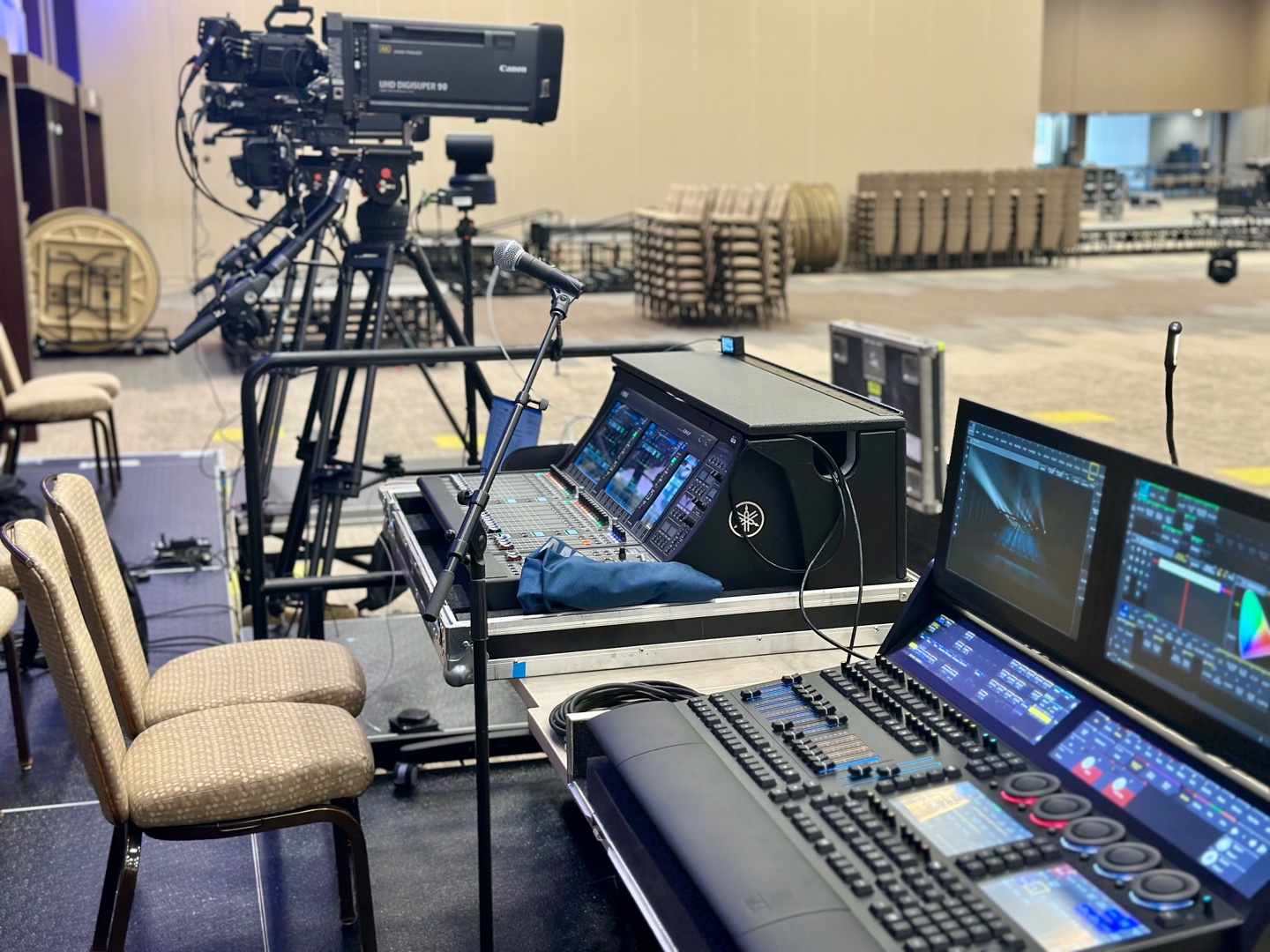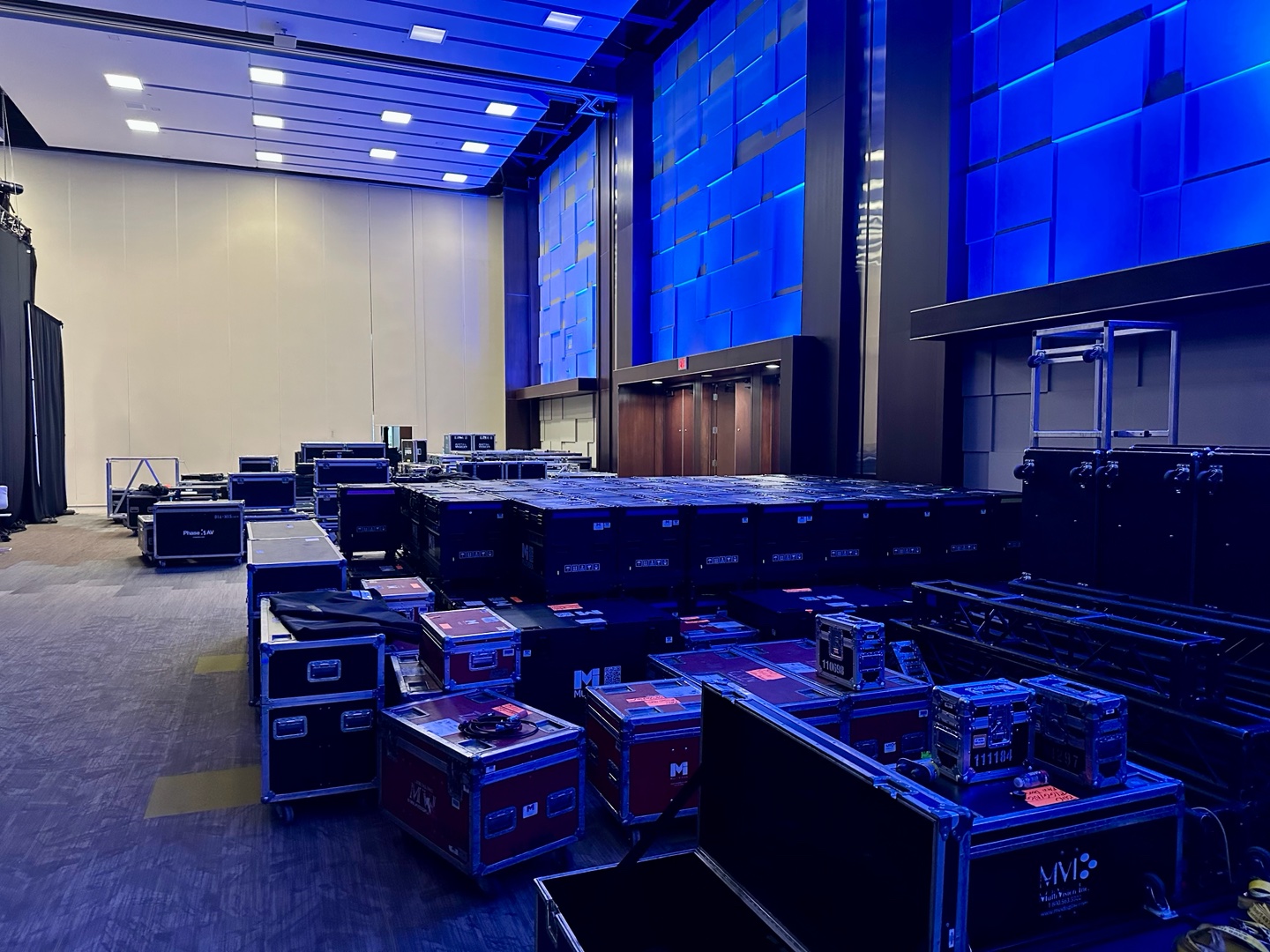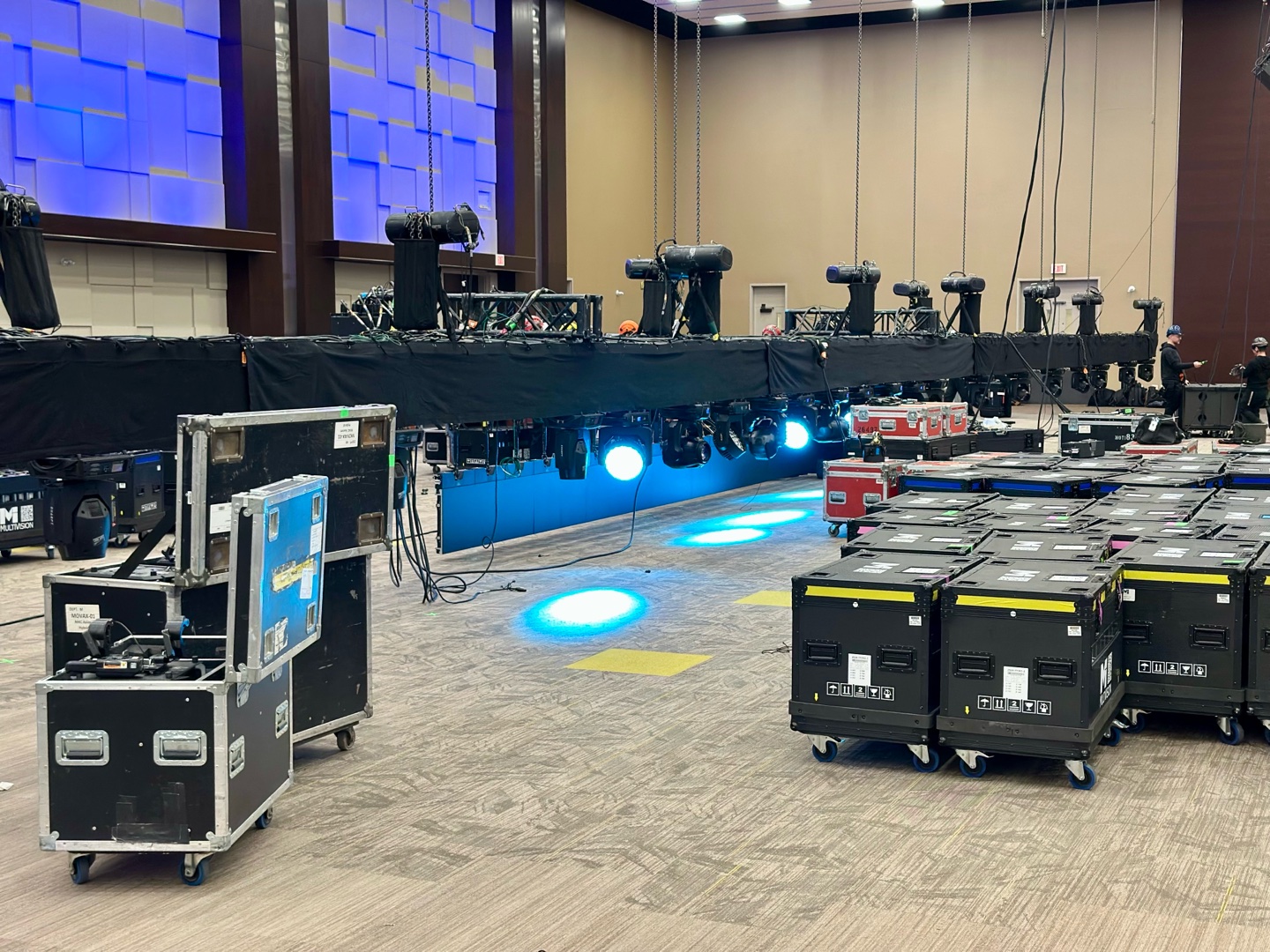
When you are scouting locations for your next corporate AGM, charity gala, or association conference, the hotel or convention center sales rep will almost always drop this line:
“We have an exclusive partnership with an in-house AV provider. It’s much easier to just use them.”
To a busy event planner, this sounds convenient. To a CFO, it sounds safe. But in the modern hospitality landscape, the phrase “in-house AV” is often an illusion designed to lock you into inflated pricing and rigid service.
The reality is that you are almost never legally obligated to use the venue’s preferred AV vendor. Here is a look behind the curtain at how the venue game actually works—and how you can protect your right to choose the best production partner for your event.
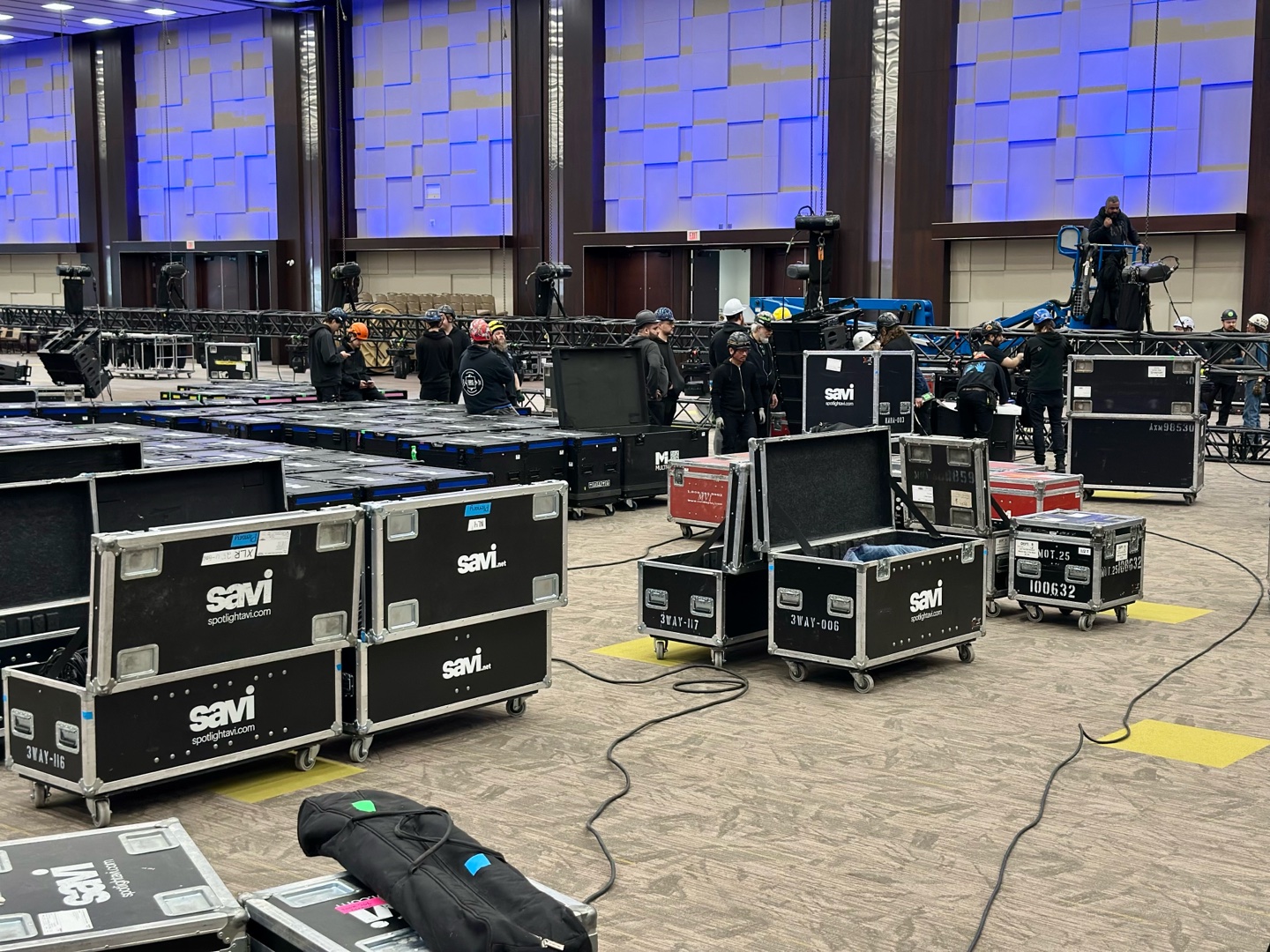
Many planners assume that the in-house AV team consists of hotel employees using equipment stored neatly in a closet downstairs.
This is almost never the case. In-house AV providers are typically massive, multinational conglomerates that rent the exclusive rights to operate inside the venue. They pay the hotel a massive percentage of their revenue—often up to 40% to 50%—in the form of a backdoor commission or kickback just for the privilege of being the "preferred" vendor.
Think about the math on that for a second. If an AV company has to hand half of your check over to the hotel just for standing in the room, how do they make a profit?
When you hire the in-house provider, you aren't paying for superior technology; you are paying a premium to cover a corporate real estate transaction.
Venues will often use high-pressure tactics to make you believe you have no choice. They might threaten to charge you massive "patch fees" (charging you thousands of dollars just to plug an outside speaker into their wall) or claim that outside vendors aren't allowed due to "insurance or safety regulations."
This is a bluff. Unless you have already signed a contract that explicitly binds you to their vendor, you hold all the leverage. Venues are in the business of selling food, beverage, and sleeping rooms. They will not walk away from a massive corporate booking just because you insist on bringing your own trusted AV team.
The secret to winning this game is striking before you sign the hotel contract. Once the ink is dry, you lose your leverage. When you are negotiating your next venue agreement, use this three-step playbook:
When reviewing the initial Request for Proposal (RFP) or contract from the hotel, look for the clauses regarding AV, technical services, or production. If it states that you must use their vendor, strike it out completely.
Replace their clause with clear language that protects your business. You can copy and paste this exact script directly into your contract negotiations:
"The Group reserves the right to utilize the audio-visual production company of its choice (SAVI) for all sessions and events without penalty, modification fees, or outside vendor surcharges from the Venue or its in-house provider. The Venue agrees to waive all patch fees, rigging fees, and supervisory fees associated with outside technical vendors."
If the venue insists that an in-house technician must sit in the room to "supervise" your outside team (and charge you $150/hour for it), ask for a written explanation of what specific liability they are supervising. Usually, when pushed for transparency, these arbitrary fees mysteriously disappear.
At SAVI, we are proudly independent. Because we don't pay kickbacks to venues, every single dollar of your budget goes directly toward top-tier equipment, meticulous planning, and highly trained, responsive technicians who actually care about the success of your event.
We don't operate on a rigid, one-size-fits-all formula. Whether you are producing an intimate executive board meeting or a multi-day conference, you deserve a partner who answers your calls, adapts to last-minute script changes instantly, and acts as an extension of your team—not a fixture of the hotel's balance sheet.
Don’t let a venue contract dictate the quality of your production. You have the right to choose. Exercise it.